Personally, I don’t think I have directly experienced injustice in my own education. That does not mean that I don’t believe that inequities exist. One thing I noticed was during my time at Meyzeek Middle School. The school’s slogan is “Where the world comes to learn.” This was because the student body was filled with all sorts of different races, upbringings, and cultures. That was easy to see in the lunchroom, the buses, and hallways. However, despite all of the different cultures, there was a noticeable difference in the make-up of the students in the advanced program classes. Those classes were often only students who applied through the magnet program and few kids from the nearby neighborhoods.
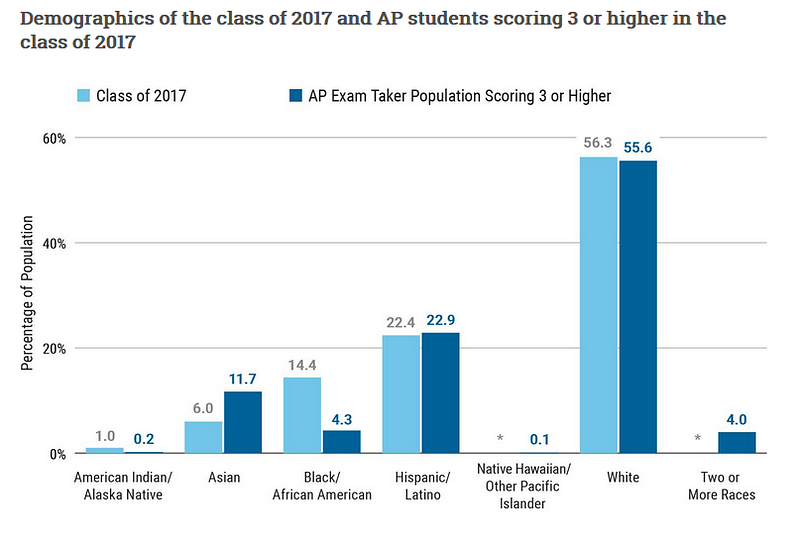
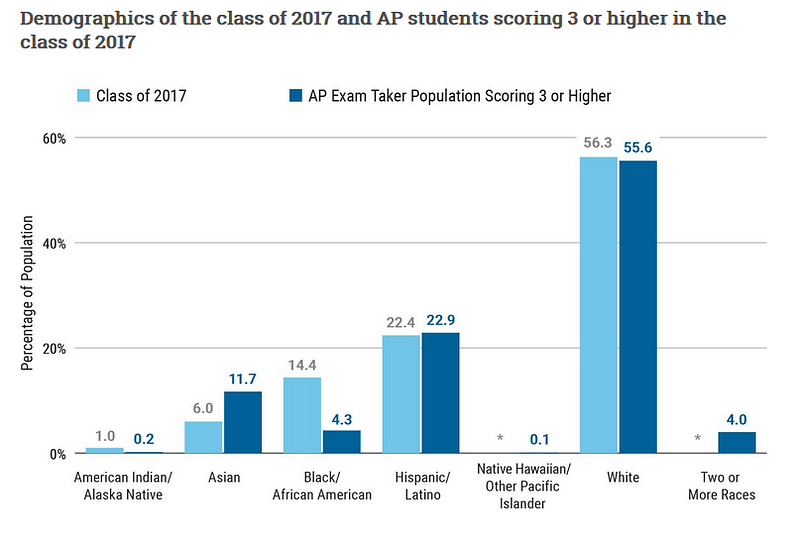
As of 2014, Black and Latino students comprised 37% of all high school students but only 27% of students taking an AP class. Similarly, Black students made up 14.4% of the class of 2017 but only 4.3% of AP students who passed an AP exam. This may seem unbelievable, but in my experience, there have been only a few Black students in my advanced classes over the course of my education. There is a clear gap between racial groups in advanced classes based on this data.
Charles Marshall, the Assistant Principal for Fern Creek’s Freshmen Academy, commented on this issue. He talked about the current system that is in place to admit children into advanced classes. Marshall, who is Black, said that generally the Black community does not trust the administration or feel comfortable around them to go through the process of putting their children into the AP classes. In his opinion, this trust issue is one big reason why this divide is happening and why there are so few minority students in AP classes.
There are possible solutions to these problems. Simply educating people about these issues can raise awareness about them. With more awareness comes more action on it, and overall more potential ways solve the issue. Another solution was proposed by Charles Marshall. One of the reasons the Black community tends to distrust the administration, he said, is because there are few people in power that are minorities themselves. He thinks that having a more diverse group of administrators might lead more people of color to begin to trust the administration. Then, as more minority students go through the AP selection process, a higher percentage of those minority students will be accepted into advanced classes, evening the percentages of minority students and white students.
I did not experience racial and cultural diversity in my classes, even when I went to a school with many different cultures. However, as more attention is given to this issue in the JCPS schooling system, I have confidence that in generations to come, the diversity that I experienced in the lunchroom, buses, and hallways will be experienced by students like me in their classrooms.


.png)