It comes as a surprise to many of my peers that I am a second generation immigrant. After all, in some ways I am your “basic white girl.” My bathroom drawer has way too many scrunchies; I live in my LuluLemon leggings; and I am a figure skater, a sport that is traditionally whitewashed. While my last name, Despa, might give a hint to some, my parents’ accents are usually the only dead giveaway. That is, besides my occasional boast that I’m bilingual.
Upon learning of my background, the first question from adults and youth alike is often “Where is Romania?” or “Do you speak Russian?” My favorite one to answer, however, has to be the good ol’ “Is that like a state?” While this general ignorance has not negatively impacted my own self-perception, nor has it outright negated my cultural identity, in recent years it has led to reluctance in sharing my background.
In tandem, as I’ve gotten older, my family has shifted to more “American” ways. We no longer celebrate Romanian/Eastern European holidays like the March 1st Spring Festival. For Easter, we traded the traditional lamb meat for chicken or whatever else we can find in the fridge. And we replaced keeping up with rugby and handball with watching Monday night football and March Madness. Through engaging in American traditions, I noticed the ease of blending into the student body. I understood the pop culture references being made by students and teachers. I wore the same clothes as my peers and ate the same things at lunch. I assimilated.
That said, I do still value some aspects of my cultural identity, and back in my early years of elementary school, my Romanian culture played a much larger role in my identity. For many first and second generation immigrants, staying true to their cultural identity makes it increasingly difficult to feel included at school. But thanks to my teachers, when I started school and my cultural identity was strongest, school inclusion was something that was not a personal struggle. School inclusion involves creating an environment where students of different races, backgrounds, ethnicities, socioeconomic statuses, and students with disabilities feel welcome.
For many first and second generation immigrants, staying true to their cultural identity makes it increasingly difficult to feel included at school. But thanks to my teachers, when I started school and my cultural identity was strongest, school inclusion was something that was not a personal struggle.
I began school at Patwin Elementary in the small town of Davis, California, a town with a lone traditional public high school, farms on every side, and an abundance of bicycles. Being home to the University of California at Davis (UC Davis), however, gives the town more diversity than one might otherwise expect. Patwin was home to many of my firsts, including my first best friend, Ella Kol. Both Ella and I come from immigrant families, although our experiences slightly differ. Both of my parents emigrated from Romania, but I was born here. Ella was born in Israel and moved to the United States a few years later.
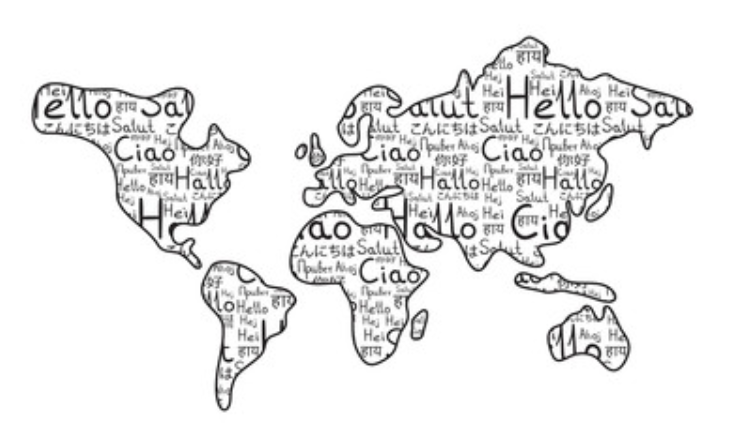
Our teachers at Patwin took small, yet meaningful, actions to highlight the diverse student body. In first grade, we would learn how to say “Hello” in one of our peer’s native languages every week. In second grade, we watched a school play about immigrants in the United States. But it was Kindergarten that set the foundation for our early school inclusivity.
Every year, Patwin hosts the Kinder-Olympics: in essence, a field day for Kindergarteners. But in contrast to the traditional every-man-for-himself mindset of field day, the Kinder-Olympics encouraged camaraderie and cultural pride. While, at the time, the games we played and the snacks we got were the highlight of the day for me and my peers, in retrospect, the opening ceremony had a greater symbolic meaning.
The ceremony consisted of each student carrying a flag made of construction paper: on one side it had the United States’s stripes and stars, and, for immigrants and children of immigrants, the other side had the flag of the country they or their family emigrated from. This gesture demonstrated inclusion and coming together while also recognizing our individuality. The opening ceremony of our rural town’s field day paralleled the opening ceremony of the Olympic Games. The Olympics see every athlete enter an extravagant arena proudly walking behind their nation’s flag bearer to the applause of thousands. It is the ultimate display of global unity. And here we were, Kindergarteners at Patwin Elementary, proudly walking with our paper flags on the sidewalk next to the playground, to the excessive applause of our parents. That day, our classroom united us.
Having the Kinder-Olympics as a Kindergartener made this event unique. Certainly no Kindergartener can grasp the deeper meaning of the Kinder-Olympics opening ceremony, and based on my parent’s photographs, all we wanted to do was get out of the California sun and eat candy. However, acknowledging student body diversity and individuality from a young age is fundamental for school inclusion. As Ella described it, “[In grades K-2] I realized I was different, but only at a base level. I don’t think it bothered me, I actually always like being different.” Kindergarten sets the framework for all our expectations of school and our thoughts and feelings towards it. It sets the tone for how we perceive ourselves in the classroom and how we feel our schools perceive us.
Setting the framework for school inclusion is essential, but that framework must be developed. This is where our schools, both nationally and in Kentucky, tend to fall short. “I’m sure I was proud and happy to walk around with my flag in the Kinder-Olympics but I think at that age, my nationality hadn’t yet grown into my identity. If I had the opportunity to represent my country in a way that I felt comfortable nowadays, it definitely would mean a lot to me and it would have more significance than it did when I was six years old,” says Ella.
“If I had the opportunity to represent my country in a way that I felt comfortable nowadays, it definitely would mean a lot to me.”
As we move through the education system, our schools no longer address individuality in the student population. “Our schools try to unify too much and gloss over our differences. But our differences are what make us great, our differences are what make us unique and that needs to be celebrated,” says Ella. For immigrants and children of immigrants, this is especially noticeable on several occasions. Twice in history class I was given an assignment to interview an extended family member about an event that happened in American history. I transcribed a fake interview. Then comes Thanksgiving Break. “Almost every year I hear ‘So guys, how was your Thanksgiving? Did you survive your family? How did you deal with your annoying cousin?’” Ella says. The intention of our teachers is to spark conversation, not to evoke feelings of loneliness. However, for some immigrants it is difficult to hear the majority of the class sharing the times they had with their family and complaining about their Uncle Joe.
Further diminishing cultural pride is the lacking representation of diverse immigrants in history classes. Textbooks are filled with the Irish potato farmers and the pilgrims, but immigrants from underdeveloped nations, individuals seeking asylum, refugees, and immigrants from geographically diverse locations are overlooked.
The basis of school inclusion starts in early grades, through activities like the Kinder-Olympics, but even the more diverse schools tend to fall short later in our educational years. While there were a few times where my Kentucky schools would try to celebrate our varying backgrounds through an after-school heritage dinner or a quick rundown of world geography, these efforts were too few and far between and only touched the surface of cultures.
Schools present a microcosm of the real world’s values; thus, our schools must modify their practices to actively demonstrate that they value our differences, because noticing each other’s differences, acknowledging them and understanding them does not only create school inclusion, but it is the basis of an accepting, inclusive, and equitable society.